No products in the cart.
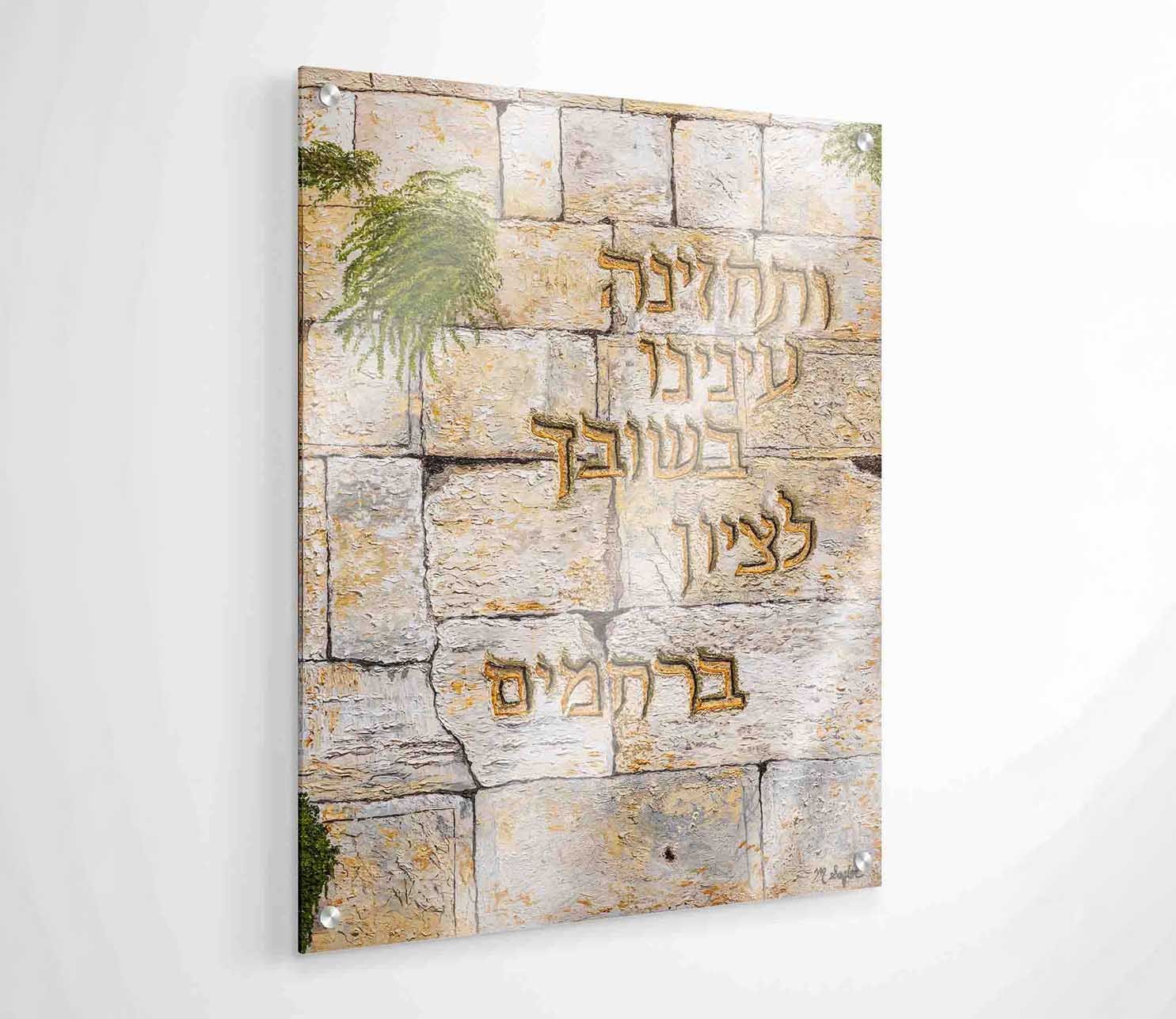
Rendered with striking realism, the Kosel stands timeless and weighty, its stones carved with longing. The painting invites the viewer to sense generations of whispered tefillos pressed into its surface. It evokes yearning and hope, conveying that the Wall itself bears witness to an unbroken plea for redemption.
Prayer etched in stone captures the Kosel with striking realism, inviting the viewer into the weight, texture, and timeless presence of its stones. Carved into the wall are the words, “May our eyes see the return to Zion with mercy,” transforming the Kosel into both a place of prayer and a voice of prayer. The etched words represent the countless tefillos whispered here over centuries—prayers shaped by tears, longing, and hope. They also suggest the voice of the Kosel itself. Once part of the Beis HaMikdash, the Wall now stands in quiet solitude, bearing the absence of Hashem’s revealed Presence and yearning for its return. The carvings imply that generations of faith and pain have pressed so deeply into this sacred place that they have permanently marked the stones. Through this, the painting presents the Kosel as both witness and participant—holding the prayers of a nation while expressing an unbroken longing for redemption, mercy, and the rebuilding of Hashem’s holy home.
© malkasafierart